Barbara Yearly
Bones & AllBarbara Yearly is Maren’s paternal grandmother and the adoptive mother of Francis Yearly, whom she and her husband took in after losing their young son, Tom. Her meeting with Maren brings the family’s hidden history into view: an adoption made in grief and tenderness, a childhood shaped by the shadow of a dead child, and a grandmother who cannot turn shared ancestry into affection for a granddaughter she has never known.
Identity and Adoption
Barbara tells Maren that she and her husband took Francis in when he was about six. He had been found under troubling circumstances, but the couple proceeded with the adoption, naming him Francis after her husband’s father. Barbara later acknowledges that they may have been too eager to overlook what had happened to the boy. He looked so much like Tom, she explains, that the resemblance made him seem almost like the lost child’s brother. Her account makes the adoption at once an act of care and an attempt, however painful, to answer a family bereavement.
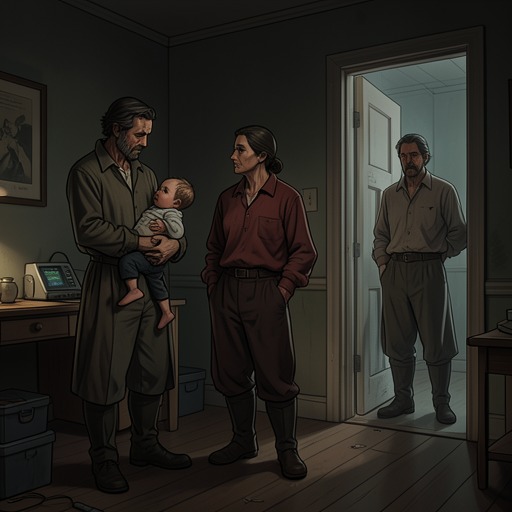
The circumstances of Francis’s arrival had been mysterious to Barbara and her husband, but she can give Maren a specific account of what was known. At a rest stop on Route Thirty-five outside Duluth, two witnesses saw a strange-looking man take the boy off a Trailways bus and lead him behind the building. When the witnesses became concerned and unlocked the restroom, they found Francis unconscious and covered in blood; the man had disappeared. The gas-station owner called the police, and Francis was taken to a hospital. His parents and the man were never found. Francis remembered nothing from before the hospital. Barbara and her husband visited him through the adoption agency and asked him to come home with them.
Barbara does not disclose what happened to Tom. A black-and-white portrait above a light switch shows him on a tricycle for his third birthday, his rosy cheeks and dimpled wrists preserved in the photograph. Barbara says that her husband died of throat cancer almost nine years earlier, when Francis was already in a home, and that it comforts her to imagine Dan and Tom together. The book leaves Tom’s death unexplained; Barbara’s grief is plain, but its circumstances remain outside her account.
Maren’s Visit
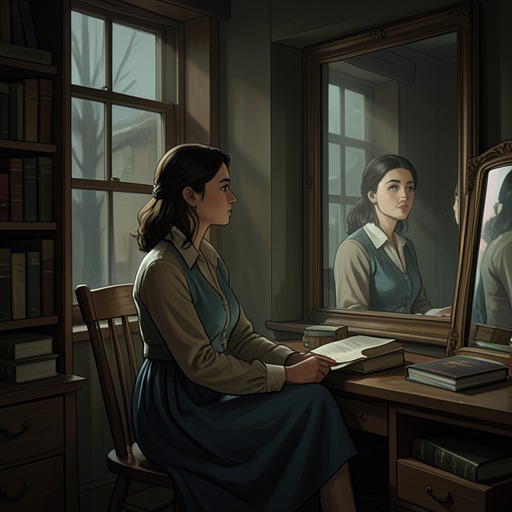
Maren finds Barbara at the end of her driveway as she is mailing a letter. In a gray shawl cardigan and shearling slippers, Barbara raises the mailbox flag, then draws her collar close and shudders as Maren approaches, despite the sunny afternoon. She first turns away and walks briskly toward the house. When Maren calls after her, Barbara stops on the upper step, studies her, and recognizes that she is the age of the person Barbara had suspected might come. Her first question is how Maren found her.
Inside, Barbara fills two glasses at the faucet and sets one beside Maren before sitting opposite her at the table. Maren cannot bring herself to call Barbara her grandmother. The hesitation gives the encounter its emotional shape: the biological relationship is established, but the intimate word feels undeserved or unavailable. Barbara asks whether Maren’s mother brought her, and Maren’s answers reveal how little Barbara knows about the granddaughter standing before her.
Maren asks whether Barbara has kept anything of Francis’s, even a photograph. Barbara says she has saved nothing, then insists that, despite their shared name, Maren is a stranger to her, as Francis had been. Maren objects that Francis was Barbara’s son and that she chose him. The disagreement is not merely over a label: Maren treats adoption as a bond carrying continuing responsibility, while Barbara describes a relationship that never became the attachment she had hoped to create.
Francis in the Yearly Household
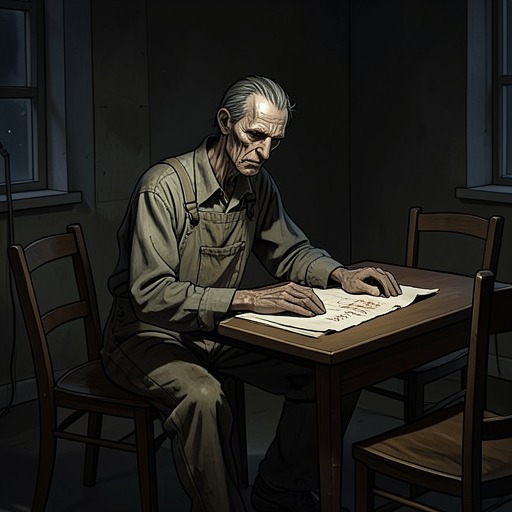
Francis’s own later account, preserved in writing for his daughter, describes the cost of being adopted into a home still organized around Tom’s absence. The Yearlys fed and sheltered him, but he remembers living under the dead boy’s measure. Sometimes they spoke of Tom as his older brother; on some of Barbara’s bad days, she set a fourth place at the dinner table. At other times, they called Francis by Tom’s name. The family’s gestures kept Tom present, but they also made the adopted child a comparison rather than an arrival in his own right.
In Francis’s recollection, Tom became the standard for every imagined future: the child who would have excelled at school, gone to a prestigious university, rescued injured birds, and grown into a doctor, veterinarian, lawyer, or engineer. Against that idealized future, Francis was told he would amount to nobody. He also remembers Tom appearing in dreams as a frightening figure with glowing red eyes and a long tongue. These details come from Francis’s retrospective account, not from Barbara’s description of the household; they show how the adoption’s promise of a home coexisted with the persistent force of comparison.
Grief and the Limits of Kinship
When Maren presses her to speak about Francis, Barbara’s account stops short of the history Maren wants. She has no saved photographs to offer and says there is no point discussing what really happened before the adoption, because no one will ever know. Her refusal protects a boundary around the past, but it also leaves Maren with fragments: the roadside discovery, the resemblance to Tom, and the decision to bring Francis home. Barbara can tell the story of how the family began, yet she cannot make it a story of uncomplicated belonging.
Barbara herself names the failure in terms of loss and responsibility. She says she had a son and made a mistake by thinking she could replace him, adding that she alone was to blame. She recalls that her husband left the decision to her because, as he understood it, no one feels the loss of a child more than his mother. Her words acknowledge that Francis was not Tom, while also revealing how the adoption was entered under the pressure of grief. The tenderness with which she traces the rim of her water glass as she speaks of Tom sits beside her inability to welcome Maren as family.
The encounter makes Barbara a figure through whom the novel distinguishes biological descent from lived kinship. She is Maren’s grandmother by family line, and she chose to make Francis her son, but neither fact guarantees closeness. Francis’s story also complicates the apparent inheritance of family identity: he was adopted, and Sully later identifies himself as Francis’s father. Barbara’s history therefore belongs to a larger pattern in which care, ancestry, and the names people give one another do not always coincide. Her brief meeting with Maren does not resolve that divide; it reveals how grief can shape a family’s acts of care while leaving its members strangers to one another.